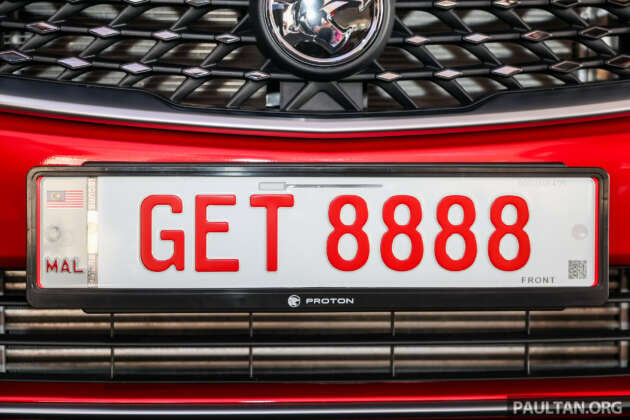
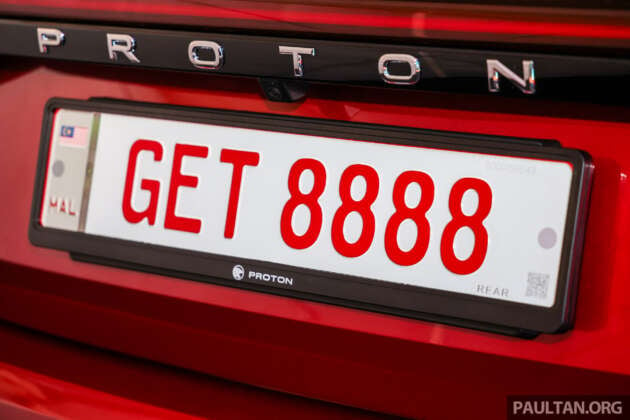
Looking at the new Teksi Madani launched by prime minister Anwar Ibrahim today, you will have noticed a new number plate stuck onto the specially-outfitted Proton S70 Premium units. This is similar to the JPJePlate that was introduced for EVs back in September 2024, albeit with a few details that mark this particular plate out as being for ride-hailing vehicles.
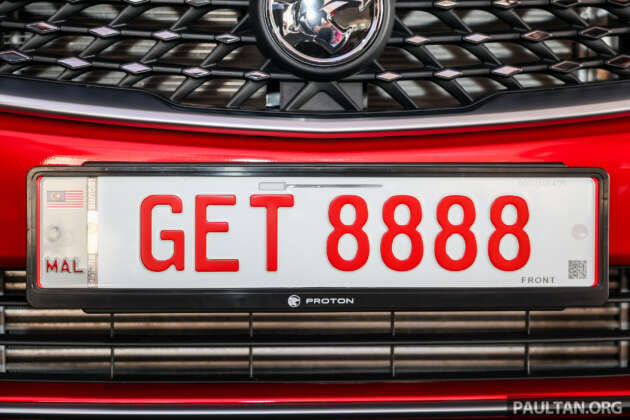
The Teksi Madani plate continues to be an embossed aluminium panel, retaining its European-inspired design with the German FE-Schrift font, reflective white paint and “MAL” tag and flag on the left side. Interestingly, the Jalur Gemilang has finally been corrected with 14 stripes, rather than 13 (missing the bottom white stripe) on the EV version.
However, the black lettering has been substituted for red, and it also loses the “authentic” hot-stamped watermark on the front plate. The aforementioned tag is also now grey instead of green, although the “secure” hologram stripe bordering it remains.
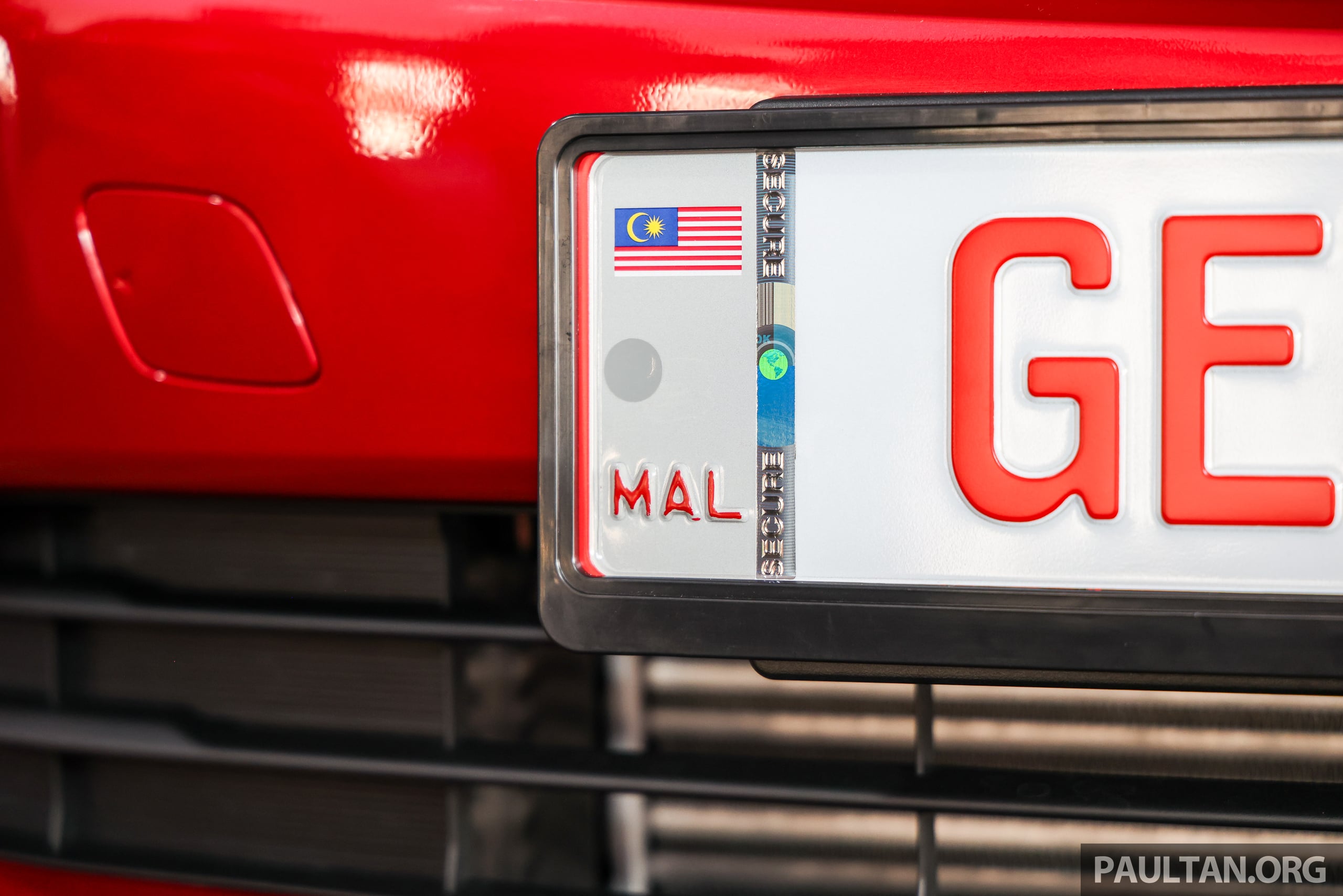
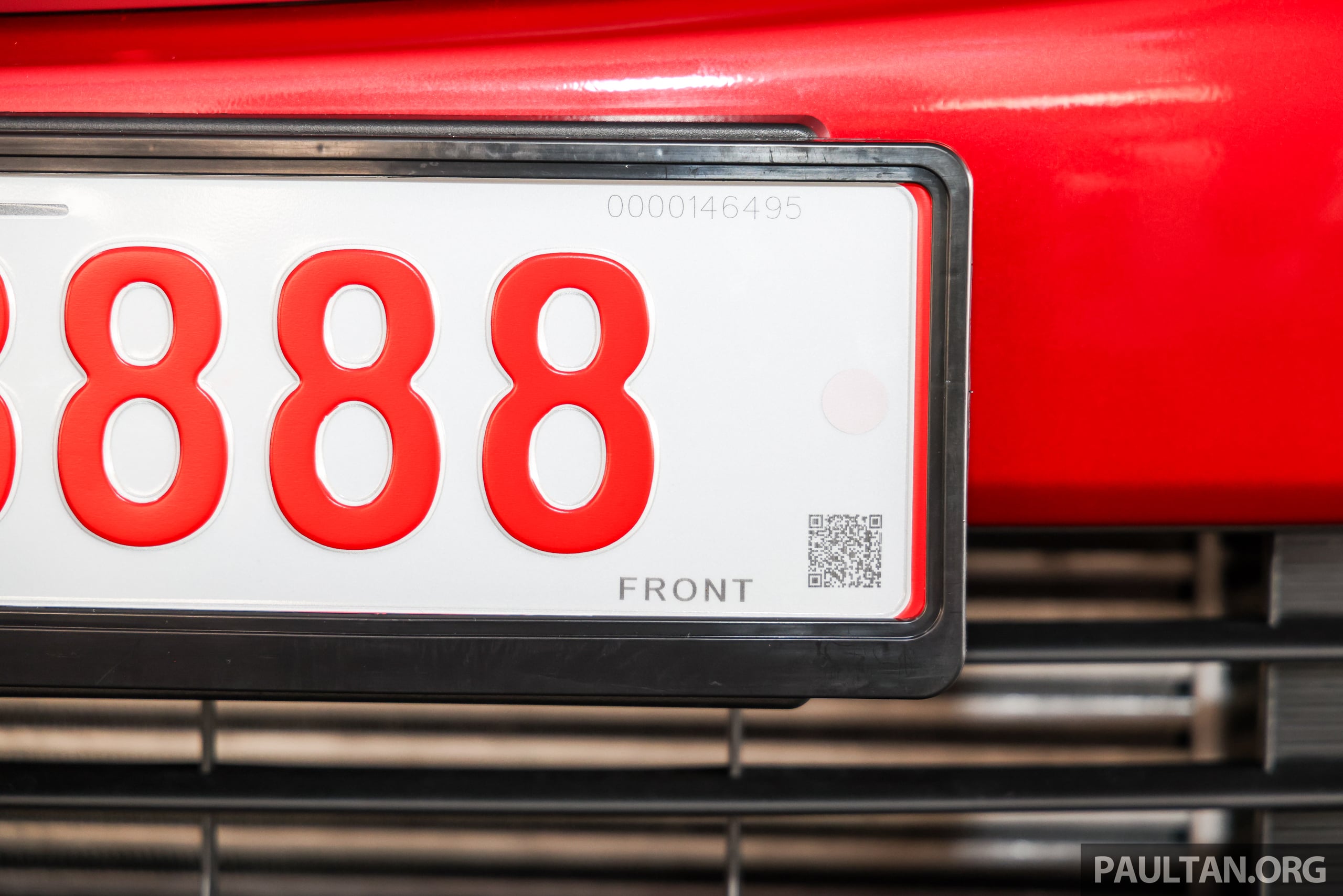
Other security features that have been retained include a unique “digital signature” QR code, a laser-engraved serial number and “front” and “rear” engravings to denote which side the plate should be facing. There’s also the (as yet unused) RFID tag at the front and holes on either end to attach security screws, although these are covered by stickers as is typical for actual real-world applications.
The new plate is joined by a new number series specific for Teksi Madani, with GET standing for Gabungan E-hailing dan Teksi. As the full name suggests, the move is part of a “taxi renewal” scheme that aims to modernise the industry by narrowing the gap between taxis and e-hailing services like Grab.
At present, Malaysian taxis use black-on-white number plates not too dissimilar to the EV plates, albeit still made from acrylic. The same plates are used for rental service cars (kereta sewa), although taxis are differentiated by the H number series.
The government has yet to confirm whether taxi drivers will need to fork out RM98 for the higher-tech plate, as EV drivers do. It also remains to be seen if it has resolved the supply issue that has hampered the issuance of new plates, to the point that many new EV owners have had to fall back to the traditional black acrylic plates – even though the JPJePlate was supposed to be mandatory for these vehicles.
The good news is, the adoption of the JPJePlate by Teksi Madani hopefully means we won’t have to wait (too) long now before the standardised number plate scheme is expanded to all vehicles, as was the stated goal during the launch of the plate.
Looking to sell your car? Sell it with Carro.